
Branding
A brand film made with AI: what works now and what does not
· 3 min read · Oddbird
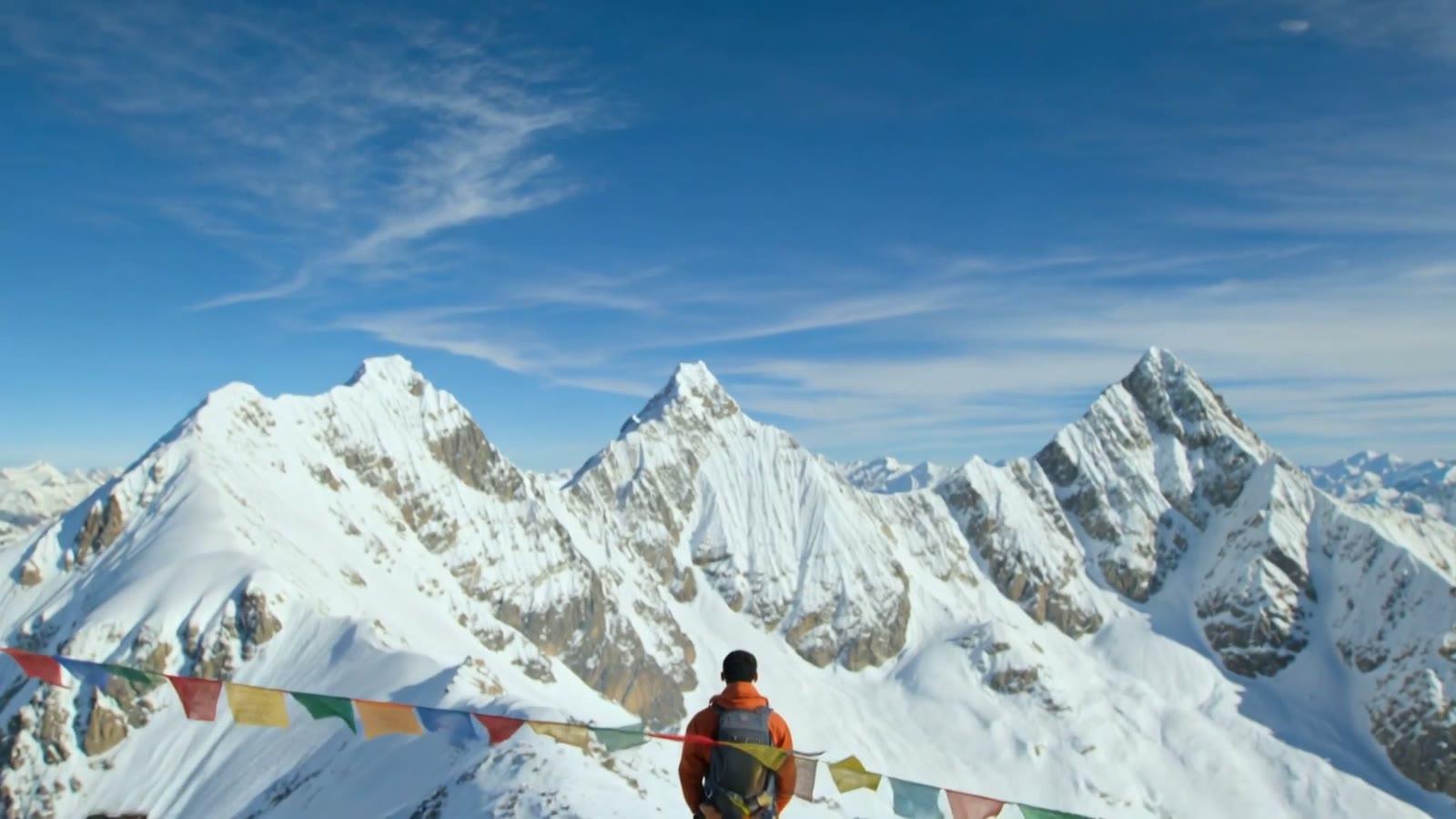
AI video tools now produce footage that a year ago took a film crew and a plane ticket. We made our own brand film with them, in the Himalayas. What it does well, where it still fails, and how to use it honestly.
What you take away
- AI video is strong at atmosphere, landscape and places you cannot easily reach. It is weak at precise details such as text, hands and your actual product.
- A film is made of separate shots of a few seconds. The work is in choosing, editing and holding it together.
- Use it for feeling, not to show something that does not exist. And be open that it is AI where it matters.
Our services page has a short film: a backpack with the Oddbird label, snowy peaks, prayer flags in the wind and a bird flying off. None of us went to the Himalayas for it. The footage was made with an AI video tool and then selected and edited by us. That is now a serious option for brands, but not for everything.
What AI video is good at
- Places and weather you cannot arrange: mountains, desert, sunrise over the sea, snow falling just right.
- Atmosphere and movement: a camera slowly drifting away, light changing, a detail coming into view.
- Making variants quickly: ten versions of one shot to choose from, instead of one shooting day.
- Visuals for an idea that is not yet a product: a campaign, a feeling, a world around your brand.
Where it still goes wrong
The weak spots are exactly the things a brand has to be precise about. Text on objects shifts or becomes unreadable, especially when the image moves. Hands sometimes have a finger too many. A face stays the same in one shot and looks like someone else in the next. And your actual product, with the right shape, colour and proportions, rarely comes out exactly right.
In our own film the label on the backpack was the hardest part. In many variants the text was just off, and those were dropped. That is normal: you make far more than you use.
| Good with AI | Better with a camera | |
|---|---|---|
| Landscape and atmosphere | Yes | Only if you are there anyway |
| Your actual product | No, details rarely match | Yes |
| Real people and your team | No | Yes |
| Trying ideas quickly | Yes | Expensive and slow |
| Text and logo in shot | Mixed, check every shot | Yes |
How an AI brand film is put together
- Start with a shot list, not a prompt. What should the viewer feel, and which images belong to that, in which order?
- Make several variants per shot. A shot usually lasts a few seconds; expect most of them to be dropped.
- Choose strictly. Check every chosen shot frame by frame for text, hands and odd distortions.
- Edit it like any film: rhythm, transitions, matching colour and sound. The edit is what turns separate shots into a brand film.
- Add your actual brand in post-production: logo, typography and sign-off. Not in the prompt.
Staying honest
An AI film is fine for setting a mood. It becomes a problem when it promises something that is not true: a product that looks different, a location you have never been to, or people who do not exist presented as customers. Since August 2026 the European AI Act also requires you to state that footage is artificially made when it looks real but is not.
Use AI video for the world around your brand. Use a camera for what you actually sell.
For us that is exactly the split. The mountains in our film are atmosphere: nobody thinks we run an office at five thousand metres. For a client's workshop, a clinic's team or the products in a shop, we simply pick up a camera.